Making Healthy Diets Affordable Requires Careful Sequencing
Food for Humanity Interim Director Michael Puma attended a session at United Nations Headquarters in New York on the forthcoming 2026 edition of The State of Food Security and Nutrition in the World, focused on the high cost of a healthy diet.
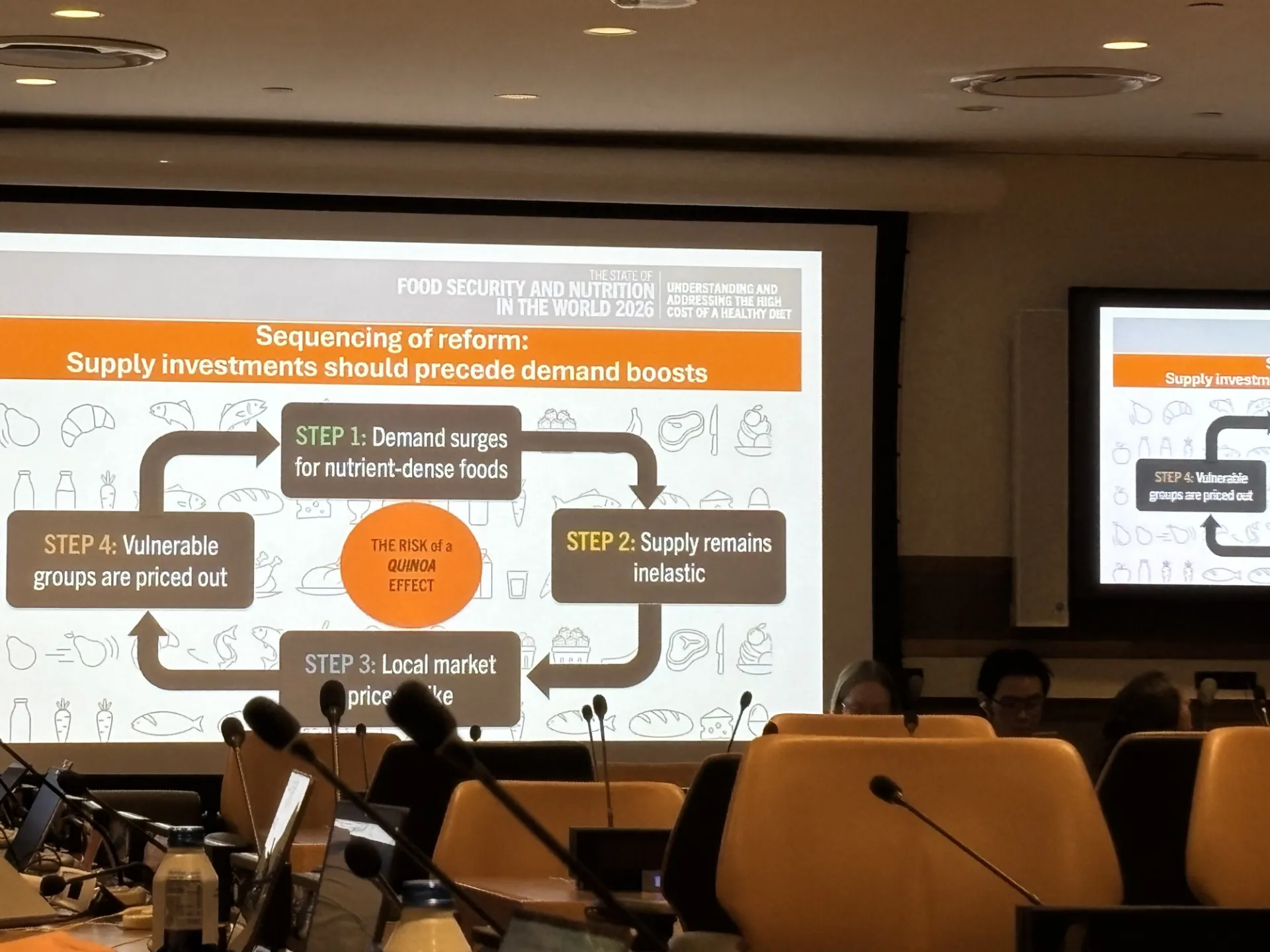
FAO Chief Economist Máximo Torero emphasized that reforms must be carefully sequenced. Subsidizing calorie-rich staple foods can unintentionally increase the relative cost of a healthy diet. Governments may first need to invest in production capacity, transportation, storage, processing, and other infrastructure required to expand the supply of nutritious foods.
Examples involving quinoa and Andean potatoes illustrated the risks of moving too quickly. Stimulating demand before supply systems are ready can raise prices and reduce local access. Supply must be strengthened first, while demand-side measures should follow carefully and be supported by institutions prepared to manage the resulting market response.