From “Just in Time” to “Just in Case”: Agrifood Systems Under Pressure
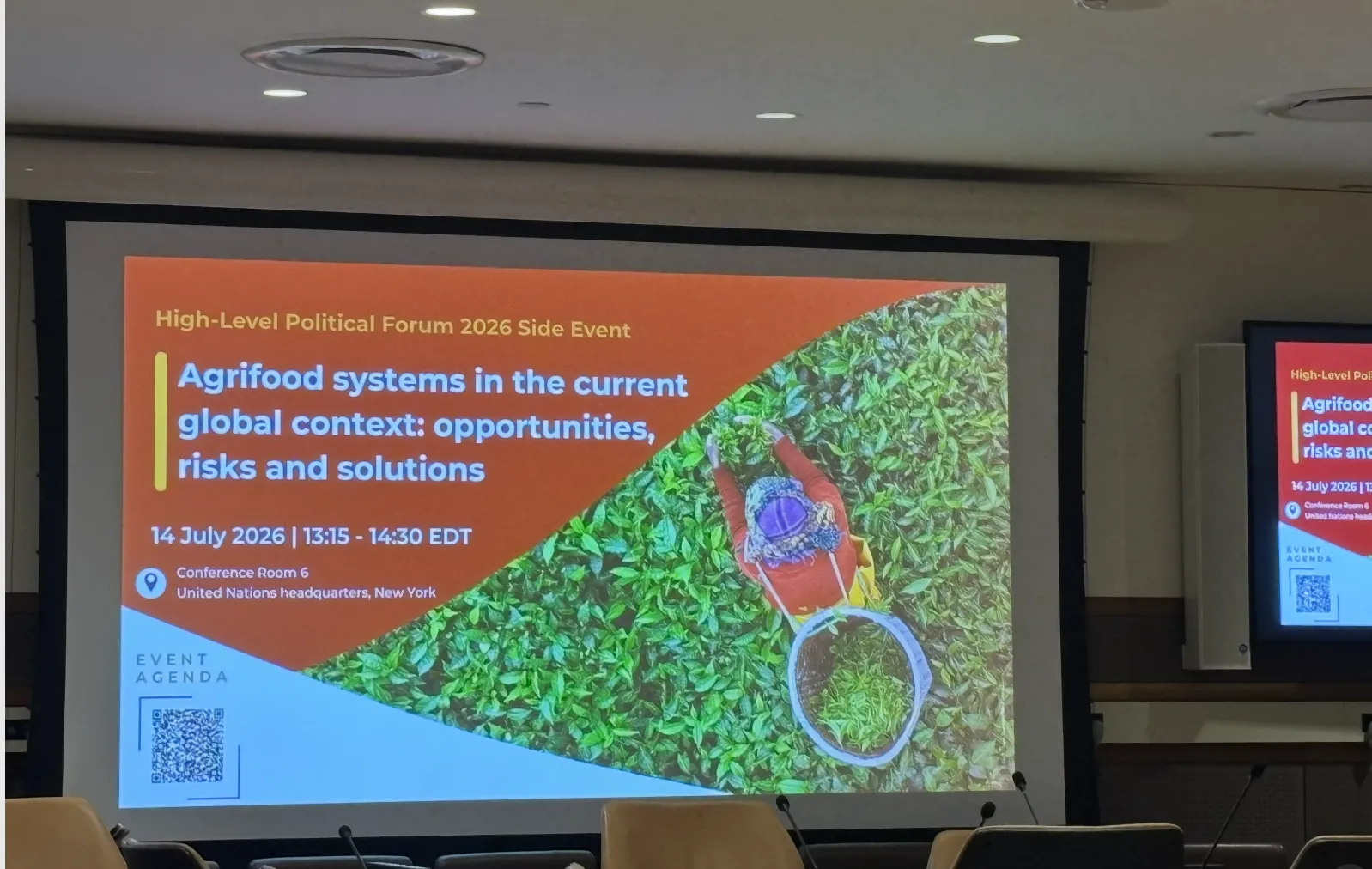
At a High-Level Political Forum 2026 side event at United Nations Headquarters, speakers described a global agrifood system facing increasingly interconnected shocks, from conflict and climate extremes to crop diseases, financial stress, and disruptions of critical trade routes.
FAO’s Máximo Torero noted that hunger is declining too slowly and unevenly, while acute food insecurity still affects more than 266 million people. Conflict remains the largest driver, followed by weather and climate extremes and economic downturns.
Geopolitical competition is also reshaping trade. Countries and firms are moving away from systems organized primarily around comparative advantage and “just-in-time” delivery toward more defensive “just-in-case” strategies. This was presented as an emerging trend, not necessarily a desirable one: greater self-protection, fragmented trade and export restrictions can intensify food insecurity elsewhere.
The discussion highlighted vulnerabilities created by concentrated breadbaskets, limited genetic diversity and reliance on a small number of maritime routes. Risks such as ENSO-related production shocks, Asian soybean rust or disruption of the Strait of Hormuz can spread through food, fertilizer, energy, transport and financial systems.
The policy message was clear: monitor prices and supply conditions, avoid export restrictions, maintain humanitarian and trade routes, protect farmers’ access to credit, and support vulnerable food-importing countries.
For Food for Humanity, the event reinforced the need for models that connect climate, production, trade, transport, storage, finance, water and human mobility. The challenge is not only to identify individual shocks, but to understand how they interact—and how policy can prevent them from cascading into wider food-security crises.