
News From the F4H Initiative
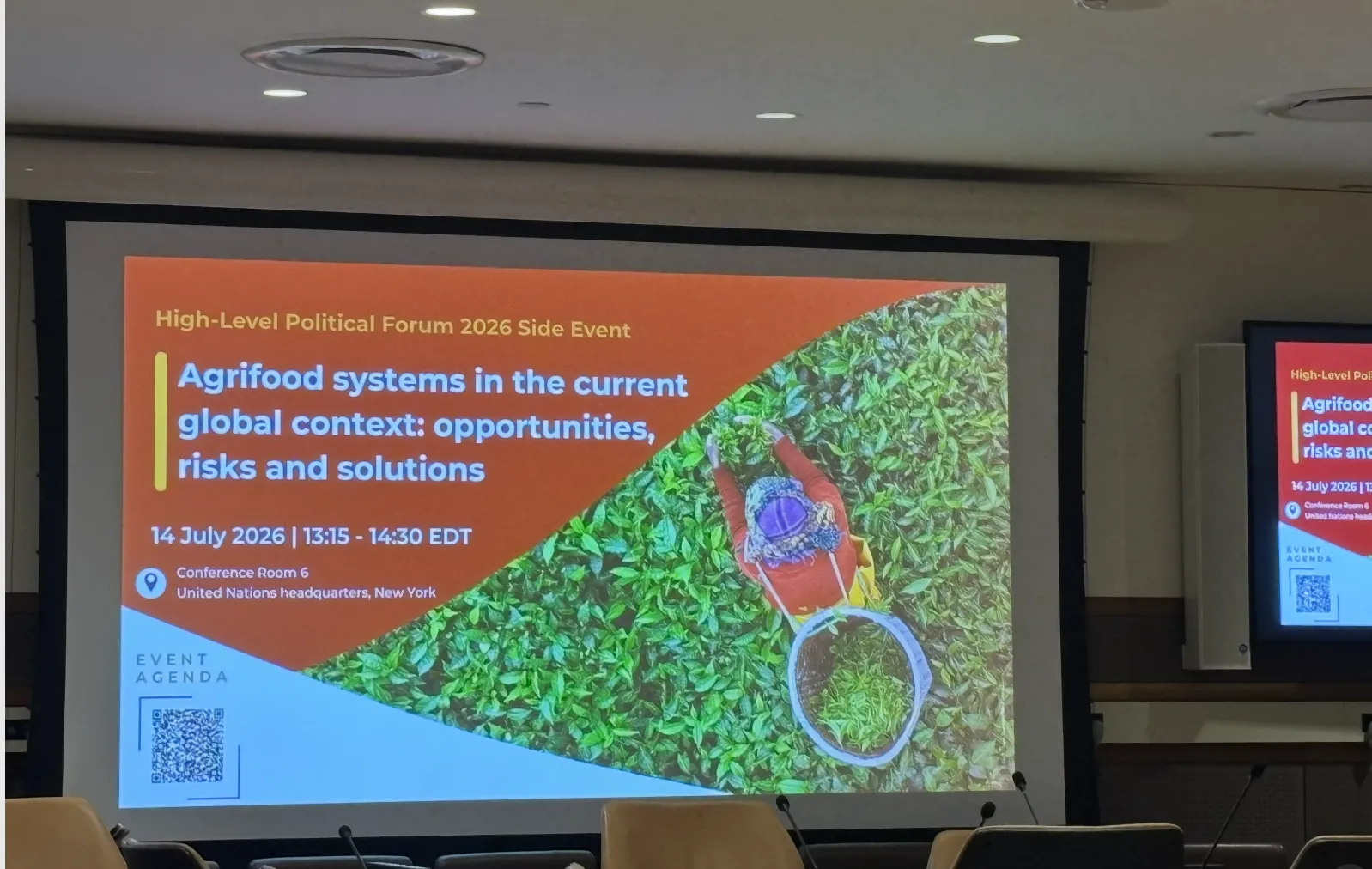
From “Just in Time” to “Just in Case”: Agrifood Systems Under Pressure
At a High-Level Political Forum 2026 side event at United Nations Headquarters, speakers described a global agrifood system facing increasingly interconnected shocks, from conflict and climate extremes to crop diseases, financial stress, and disruptions of critical trade routes.
FAO’s Máximo Torero noted that hunger is declining too slowly and unevenly, while acute food insecurity still affects more than 266 million people. Conflict remains the largest driver, followed by weather and climate extremes and economic downturns.
Geopolitical competition is also reshaping trade. Countries and firms are moving away from systems organized primarily around comparative advantage and “just-in-time” delivery toward more defensive “just-in-case” strategies. This was presented as an emerging trend, not necessarily a desirable one: greater self-protection, fragmented trade and export restrictions can intensify food insecurity elsewhere.
The discussion highlighted vulnerabilities created by concentrated breadbaskets, limited genetic diversity and reliance on a small number of maritime routes. Risks such as ENSO-related production shocks, Asian soybean rust or disruption of the Strait of Hormuz can spread through food, fertilizer, energy, transport and financial systems.
The policy message was clear: monitor prices and supply conditions, avoid export restrictions, maintain humanitarian and trade routes, protect farmers’ access to credit, and support vulnerable food-importing countries.
For Food for Humanity, the event reinforced the need for models that connect climate, production, trade, transport, storage, finance, water and human mobility. The challenge is not only to identify individual shocks, but to understand how they interact—and how policy can prevent them from cascading into wider food-security crises.
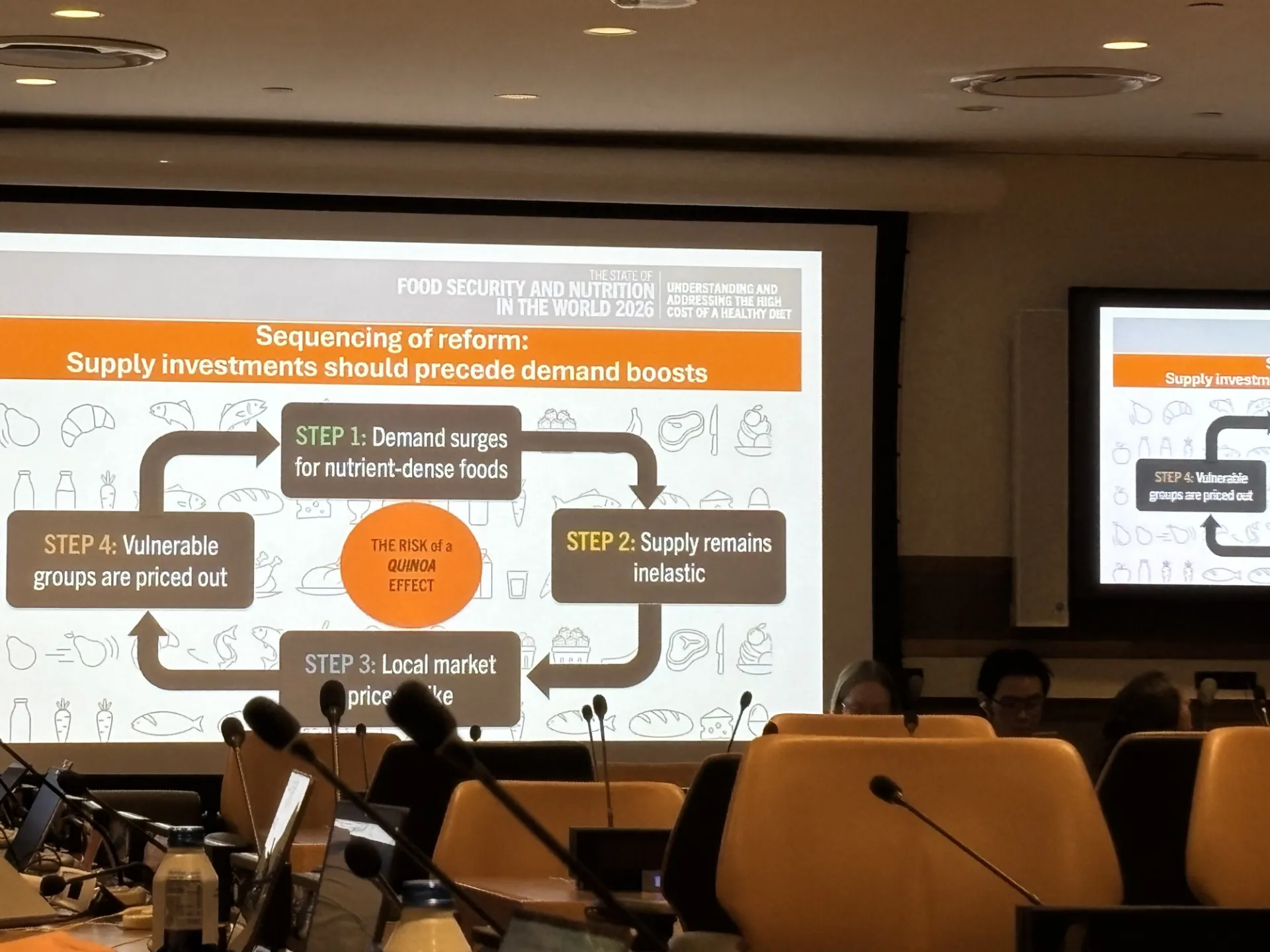
Making Healthy Diets Affordable Requires Careful Sequencing
Food for Humanity Interim Director Michael Puma attended a session at United Nations Headquarters in New York on the forthcoming 2026 edition of The State of Food Security and Nutrition in the World, focused on the high cost of a healthy diet.
FAO Chief Economist Máximo Torero emphasized that reforms must be carefully sequenced. Subsidizing calorie-rich staple foods can unintentionally increase the relative cost of a healthy diet. Governments may first need to invest in production capacity, transportation, storage, processing, and other infrastructure required to expand the supply of nutritious foods.
Examples involving quinoa and Andean potatoes illustrated the risks of moving too quickly. Stimulating demand before supply systems are ready can raise prices and reduce local access. Supply must be strengthened first, while demand-side measures should follow carefully and be supported by institutions prepared to manage the resulting market response.
The F4H Living Lab is Live!
For those of you interested in food systems, here’s an update from the Food for Humanity Initiative: “If you have been to the Lamont Doherty Earth Observatory (LDEO) campus, you may recall seeing a very nice but dormant greenhouse next to the Tree Ring Lab. The greenhouse originally came with the Lamont property that was donated to Columbia University in 1948, and had undergone extensive renovations in the early 2000’s thanks to the Department of Earth and Environmental Sciences Chair Kevin Griffin’s research funding…
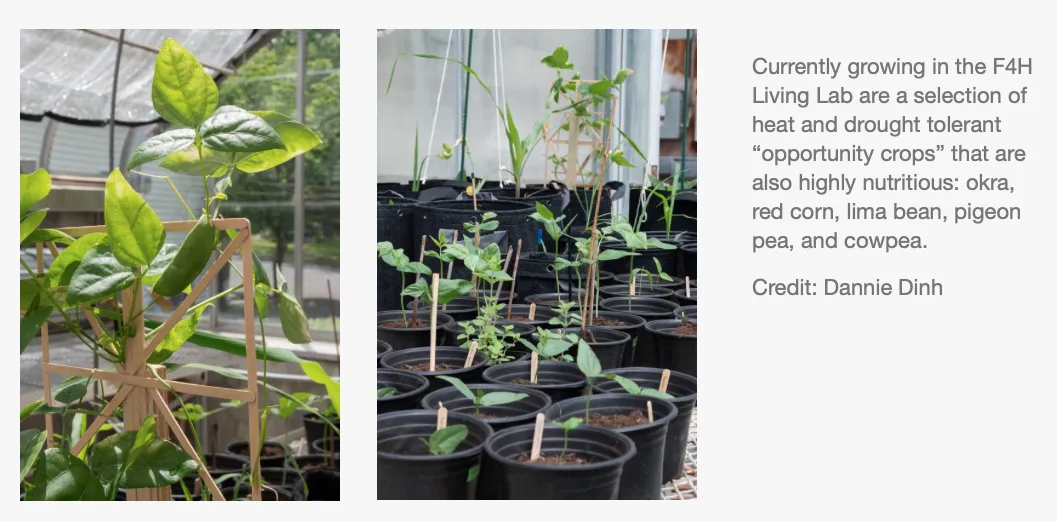
With a bit of love and labor investment from the F4H team (including our two graduate interns, Angie and Michael), the Lamont greenhouse has been revived as the F4H Living Lab this summer, hosting two students-led research projects to study crop response in a hot and dry environment not so different from the crop fields in climate-impacted regions around the world.
And don’t worry, we are not “cooking” plants (or students) in the greenhouse. With running fans, open air vents, and added shade panels, indoor temperatures have remained in the safe zone, around 90-105°F in the daytime and cool down to 70°F in the evening. The crop plants seem to love it so far. The next phase of retrofitting will involve upgrades such as astronomical sun tracking and automation of the fans and shades, and new energy-efficient fans and professional-grade shade panels. Currently growing in the F4H Living Lab are a selection of heat and drought tolerant “opportunity crops” that are also highly nutritious: okra, red corn, lima bean, pigeon pea, and cowpea.

Food Systems Education and Research in the Global South
In June, F4H partnered with the Stockholm Initiative for Food Security (SI) to host an inaugural working session on Food Systems Education and Research in the Global South: From Academic Collaboration to Field-based Operational Platforms to explore F4H and SI’s strategic alignment and opportunities for collaboration. The event convened participants from the Columbia research community as well as international development practitioners and policymakers from the Global South.
Food Politics 2026: Science vs. Ideology
Prof. Sandra Albrecht shared this exciting food-related event: Columbia University Epidemiology Grand Rounds (CUEGR)
Talk Title: Food Politics 2026: Science vs. Ideology
Date/time: Wednesday, March 11, 2026; 4:00 – 5:30pm
Speaker: Marion Nestle; Paulette Goddard Professor of Nutrition, Food Studies, and Public Health Emerita, NYU
In-person location: Columbia University Mailman School of Public Health; 701 West 168th Street; Room 301
To attend this lecture via zoom, register here:https://bit.ly/4sxRzgW_CUEGR_MARCH11