Getting back on track to meet global anaemia reduction targets: a Lancet Haematology Commission
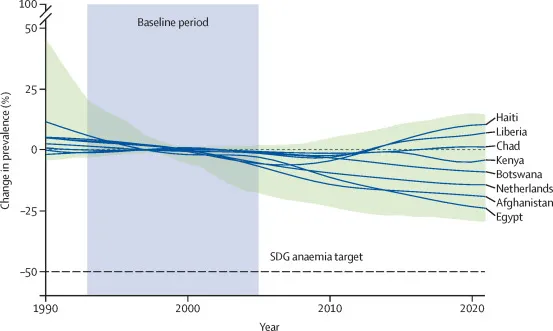
The Commission takes stock of why the world is far off track to meet global anaemia reduction targets and offers a roadmap to get efforts back on course. As it stands, anaemia affects nearly 2 billion people worldwide, and most countries are far off track to meet reduction targets.
Five takeaways:
1. Anaemia has multiple drivers, from poverty, food insecurity, and poor WASH to infections, chronic diseases, and inherited blood disorders. Recognising this complexity is key to designing context-specific solutions.
2. Reliable surveillance is patchy. Nearly half of countries lack recent national anaemia data for women or children, and almost none collect comprehensive cause-specific information. Better integrated data platforms are urgently needed.
3. Iron deficiency remains the leading cause, but infections, inflammation, micronutrient deficiencies, blood loss, and environmental stressors (like air pollution and climate change) all play major roles. Interventions must address this full spectrum.
4. Reducing anaemia requires strong governance across health, nutrition, and social sectors. Equity and human rights should be central, ensuring programmes reach the most vulnerable while being tailored to local contexts.
5. The current WHO target of a 50% reduction by 2030 is unattainable with existing tools. A new evidence-based framework suggests a more realistic 12–22% global reduction, with country-specific goals that balance ambition and feasibility.
Renewed commitment, better data, and more realistic targets can finally make a dent in this silent global epidemic.
By Sarah H Atkinson, et al.
Read via the Lancet Haematology Commissions